
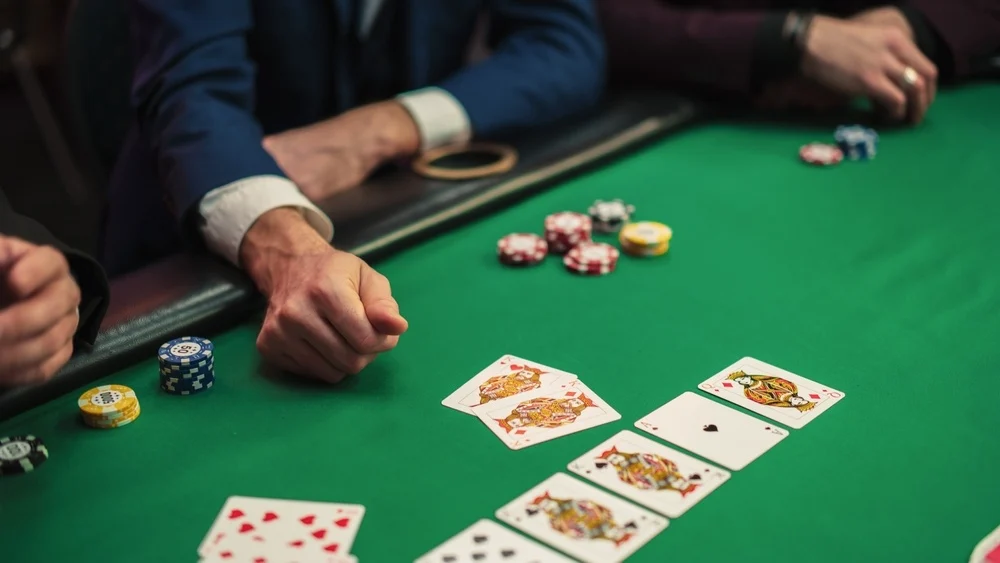
The Intersection of Poker and Behavioral Economics for Better Decision-Making
Think about the last big decision you made. Maybe it was a career move, an investment, or even a tough personal choice. Chances are, it wasn’t made with perfect, cold logic. It was messy, influenced by hidden biases and emotions you might not have even recognized.
Here’s the deal: to get better at those calls, you can look to two unlikely teachers—a poker table and the science of behavioral economics. One is a gritty arena of incomplete information and psychological warfare. The other is the academic study of why we make irrational financial choices. Together, they form a masterclass in navigating uncertainty. Let’s dive in.
Poker Isn’t Gambling. It’s a Decision Lab.
First, let’s clear the air. To the uninitiated, poker looks like a game of chance. But any pro will tell you—and honestly, they’re right—it’s a game of skill disguised as luck. Every hand is a cascade of decisions under pressure, with limited data, and real (if temporary) consequences.
You don’t know the cards your opponents hold. You have to infer, to read tells, to calculate probabilities on the fly. This mirrors life almost perfectly. We never have all the information. We have to act anyway. Poker forces you to practice this, over and over, in a compressed timeframe. It’s a simulator for real-world risk assessment.
The Behavioral Biases That Bluff Us All
This is where behavioral economics enters the pot. Pioneered by thinkers like Daniel Kahneman and Amos Tversky, this field catalogs the mental shortcuts—heuristics—and biases that lead us astray. Poker players have slang for these very same traps. Recognizing them is the first step to beating them.
| Behavioral Economics Concept | Poker Player’s Term | How It Hurts Your Game (And Your Life) |
| Loss Aversion | Playing Scared Money | The pain of losing $100 feels sharper than the joy of winning $100. In poker, this makes you fold winning hands too often. In life, it keeps you in a bad job, avoiding the risk of a better one. |
| Sunk Cost Fallacy | Chasing or Going on Tilt | Throwing good money after bad because you’re “already invested.” Staying in a losing hand hoping the river card saves you. It’s the same logic that makes you finish a terrible movie just because you paid for the ticket. |
| Confirmation Bias | Leveling Yourself | You decide an opponent is bluffing, so you only see evidence that supports that. You ignore the single, glaring clue that they have the nuts. You seek info that confirms your pre-existing story. |
| Resulting | Resulting (Yes, they use the same word!) | Judging a decision purely by its outcome. Folding the best hand was correct based on the info you had, even if you later see you would have won. A good process can lead to a bad result, and vice versa. |
Separating Skill from Luck: The Ultimate Mind Hack
Perhaps the most powerful lesson from this intersection is the skill/luck dichotomy. In poker, you can make every mathematically correct decision and still lose the hand. That’s luck. But over hundreds of hands, skill dominates. The key is to focus on the quality of your decision-making process, not the immediate, noisy outcome.
Behavioral economics calls this “resulting,” as we saw. We’re wired to learn from outcomes, but in uncertain environments, that’s a flawed teacher. It leads to superstitious thinking—”I wore my red shirt and won, so it’s lucky!”—and punishes good, disciplined choices.
So, how do we apply this? You start by reviewing your decisions away from the heat of the moment. Poker players call this a “hand history review.” In life, it might be a weekly reflection or a decision journal. Ask yourself: “What did I know at the time? What was my process? Would I make the same call again?” This builds a feedback loop based on process, not just results.
Practical Tactics for Clearer Thinking
Alright, enough theory. Let’s get practical. Here are a few concrete strategies borrowed from the poker-behavioral economics playbook.
- Quantify Your Uncertainty: Poker players think in probabilities, not absolutes. Instead of “This investment will work,” try “I estimate a 70% chance this investment meets its target.” This subtle shift acknowledges the unknown and keeps you flexible.
- Pre-Commit to Rules: To combat tilt (emotional decision-making), pros set loss limits before they sit down. In your life, create rules for yourself. “If a project runs 25% over budget, I will re-evaluate from scratch.” This curbs emotional escalation in real-time.
- Seek Disconfirming Evidence: Actively argue against your own hypothesis. Think your negotiation strategy is solid? Force yourself to list three ways it could fail. It’s like asking, “What hand could my opponent have that beats me?” It’s uncomfortable, but it reveals blind spots.
The Endgame: Becoming a Better Decision-Maker
At its core, this intersection teaches humility. It teaches that we are not perfectly rational calculators. We are emotional, biased, and easily fooled—especially by ourselves. And that’s okay. Recognizing that flaw is the beginning of true strength.
Poker provides the visceral, high-stakes practice ground. Behavioral economics gives us the map of the minefield in our own minds. When you combine them, you start to see decisions differently. You begin to appreciate the process. You learn to detach your ego from a single outcome and focus on the long-term trajectory of your choices.
You start to realize that the goal isn’t to win every hand. It’s to make the best possible move with the cards you’re dealt, time after time, regardless of the short-term noise. And honestly, isn’t that what we’re all trying to do?